Science
Sigma has multiple proprietary delivery platforms that are being developed to broaden the application of genetic medicines.
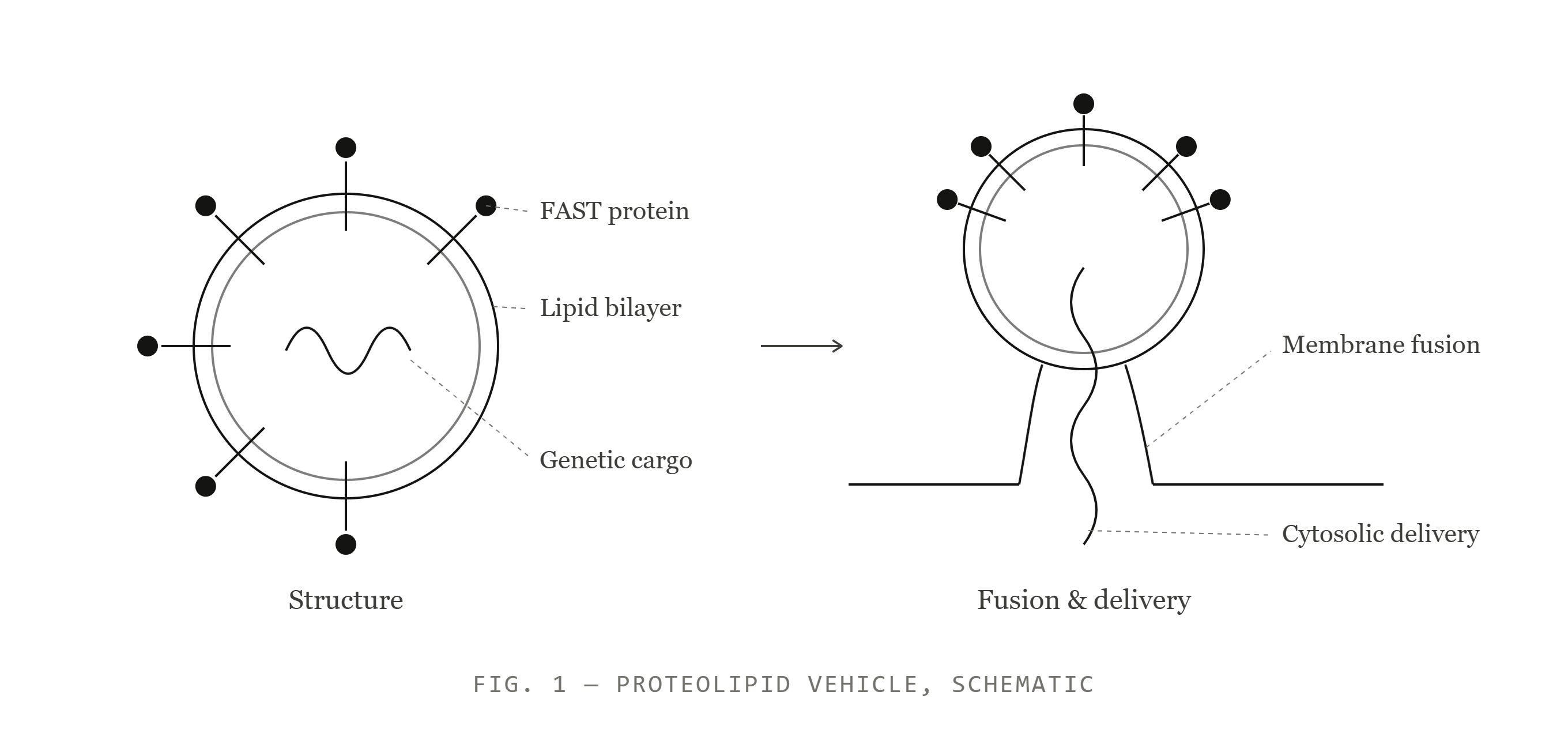
Proteolipid Vehicles (PLVs)
Proteolipid Vehicles deliver genetic medicines into target cells by membrane fusion. Fusion-associated small transmembrane (FAST) proteins built into a proprietary lipid formulation drive PLVs to fuse with the cell membrane and release their cargo directly into the cytosol, bypassing the endosomal pathway. This direct cytosolic delivery enables broad biodistribution to major organs and the capacity to carry large genetic constructs, from DNA and mRNA to complete CRISPR-Cas9 gene-editing systems. Distribution beyond the liver allows high systemic doses without liver toxicity, and low immunogenicity supports repeat dosing. The platform is validated in vivo across mouse and non-human primate models, with its leading asset in clinical trials.
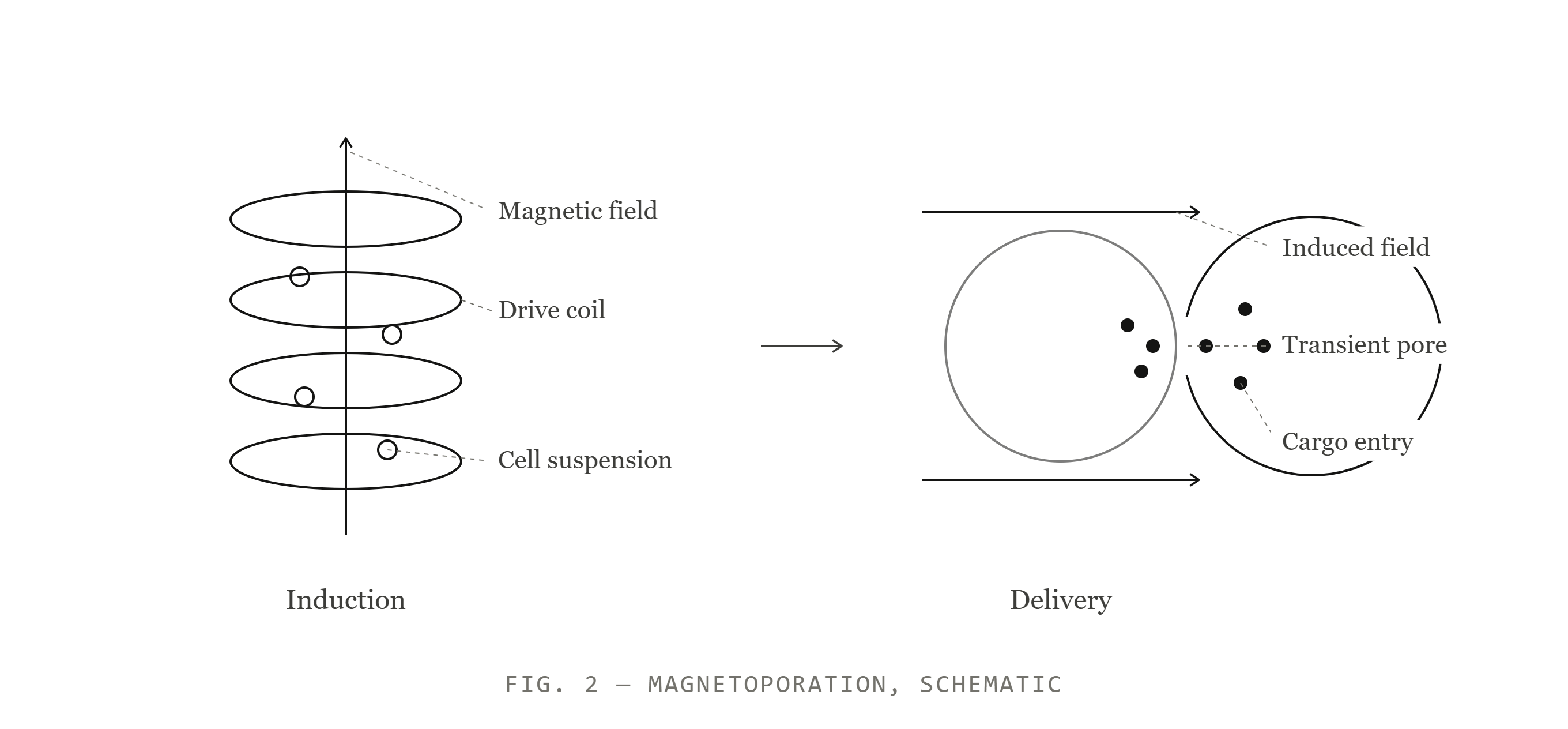
Magnetoporation (MP)
Magnetoporation engineers cells outside the body using contactless magnetic induction. The platform applies precisely tuned pulsed magnetic fields to induce a transient electric field within the cell suspension, briefly and reversibly opening the membrane to deliver genetic cargo. Cells are treated in standard culture media with no beads or additives, achieving high-efficiency delivery of DNA, RNA, and protein into primary human cells while preserving viability and proliferative capacity. Magnetoporation improves with scale, as the induced field strengthens with reactor volume, making it a gentle, reproducible, and scalable path to manufacturing gene-modified cell therapies and cellular products.